
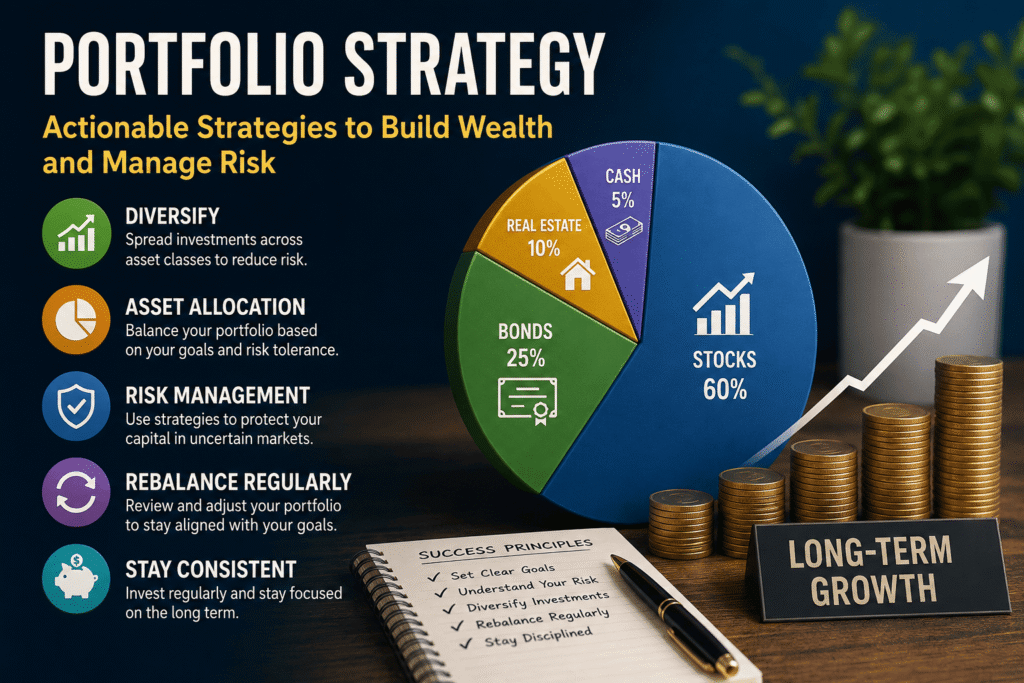
Actionable Ways to Build Wealth While Managing Risk
Investing is one of the most effective ways to grow wealth over time, but successful investing requires more than simply buying stocks and hoping for the best. A well-designed portfolio strategy helps investors balance growth opportunities with risk management, allowing them to achieve their financial goals while navigating market uncertainty.
Whether you’re a beginner investor or someone looking to improve your existing portfolio, understanding the fundamentals of portfolio construction can significantly improve your long-term results.
What Is a Portfolio Strategy?
A portfolio strategy is a plan that determines how your investments are allocated across different asset classes such as stocks, bonds, real estate, and cash. The primary goal is to create a mix of investments that aligns with your financial objectives, investment timeline, and risk tolerance.
A strong portfolio strategy helps investors:
- Build wealth consistently over time
- Reduce exposure to unnecessary risks
- Maintain financial stability during market downturns
- Take advantage of growth opportunities across different sectors and markets
Rather than chasing short-term trends, successful investors focus on creating a diversified portfolio designed to perform across various market conditions.
Start With Clear Financial Goals
Every investment strategy should begin with clearly defined goals. Ask yourself:
- Are you investing for retirement?
- Saving for a home purchase?
- Building passive income?
- Growing generational wealth?
Your goals will influence how aggressively or conservatively you invest. For example, a young investor with a 30-year investment horizon may allocate more money to stocks, while someone approaching retirement may prioritize capital preservation and income-producing assets.
Diversification: The Foundation of Risk Management
One of the most important principles in portfolio management is diversification. Diversification involves spreading investments across multiple asset classes, industries, and geographic regions.
Instead of putting all your money into a single stock or sector, diversification helps reduce the impact of poor performance from any one investment.
A diversified portfolio may include:
Stocks
Stocks offer growth potential and can help investors build wealth over the long term. Consider investing across multiple sectors such as technology, healthcare, consumer goods, and financial services.
Bonds
Bonds provide stability and predictable income. They often perform differently than stocks, helping reduce overall portfolio volatility.
Real Estate
Real estate investments can generate rental income and provide protection against inflation. Real Estate Investment Trusts (REITs) offer a convenient way to gain exposure without directly owning property.
Cash and Cash Equivalents
Maintaining a portion of your portfolio in cash provides liquidity and flexibility during market downturns or unexpected financial situations
Asset Allocation Matters More Than Stock Selection
Many investors spend significant time searching for the next winning stock. However, research consistently shows that asset allocation has a greater impact on long-term portfolio performance than individual investment selection.
A sample allocation for a moderate-risk investor might look like:
- 60% Stocks
- 30% Bonds
- 10% Cash or Alternative Investments
Meanwhile, a more aggressive investor might allocate:
- 80% Stocks
- 15% Bonds
- 5% Cash
The right allocation depends on your personal circumstances, risk tolerance, and financial objectives.
Rebalance Your Portfolio Regularly
Over time, market movements can cause your portfolio allocation to drift from its original target.
For example, if stocks perform exceptionally well, they may represent a larger percentage of your portfolio than intended, increasing your risk exposure.
Rebalancing involves periodically adjusting your investments back to your target allocation. This process helps:
- Maintain your desired risk level
- Lock in gains from outperforming assets
- Prevent overexposure to any single asset class
Many financial professionals recommend reviewing and rebalancing portfolios at least once or twice per year.
Avoid Emotional Investing
One of the biggest threats to investment success is emotional decision-making.
During market declines, fear often causes investors to sell assets at the worst possible time. During market rallies, greed can lead investors to take excessive risks.
Successful investors follow a disciplined strategy and avoid making decisions based on short-term market noise.
Key habits include:
- Maintaining a long-term perspective
- Following a predetermined investment plan
- Avoiding panic selling during downturns
- Continuing regular investments regardless of market conditions
The Power of Consistent Investing
Building wealth does not require perfect timing. In fact, consistently investing over time often produces better results than trying to predict market movements.
Through dollar-cost averaging, investors contribute a fixed amount at regular intervals, purchasing more shares when prices are low and fewer shares when prices are high.
Benefits include:
- Reduced market timing risk
- Consistent portfolio growth
- Improved investing discipline
- Lower emotional decision-making
Monitor Performance Without Overreacting
While it’s important to review your portfolio periodically, checking investment performance too frequently can lead to unnecessary stress and impulsive decisions.
Instead of focusing on daily fluctuations, evaluate:
- Progress toward financial goals
- Portfolio diversification
- Asset allocation balance
- Long-term performance trends
Remember that investing is a marathon, not a sprint.
Final Thoughts
A successful portfolio strategy combines growth opportunities with effective risk management. By setting clear goals, diversifying investments, maintaining proper asset allocation, and staying disciplined during market fluctuations, investors can create a strong foundation for long-term wealth creation.
The most effective portfolio is not necessarily the one that generates the highest returns in a single year—it’s the one that helps you consistently achieve your financial goals while managing risk along the way.

AI-powered investing insights for the modern retail investor. No hype, no noise — just analysis.
Policy
© 2026 Invessence. All rights reserved.